

 Written by
 The Perfect MTB lineup – According to Joe

First off, let me preface this. I have spent my life thinking about 2 wheelers that ride off road. Seriously, as some of you know – I’m old, and can look back on almost a complete life of 2 wheels – specifically 2 wheels offroad. I started my life on 2 wheels like so many of us as a young little dork on a Schwinn Stingray. But, unlike a lot of people I just have never stopped digging bikes, or anything with 2 wheels that is meant to be ridden offroad. All these years later, I basically spend my days either on a bike, working on bikes, thinking about bikes, day dreaming about bikes, experimenting with bikes, reading about bikes, following way to many Instagram accounts about bikes… you get the picture. Ask my wife, I promise she will just roll her eyes.
From those early days on kid bikes I progressed to riding Motocross bikes and a little bit of street motorcycles. I raced road bicycles and was a student of that craft for a while as well. I still ride an offroad motorcycle and a gravel bike, but the thing that has never wavered for me, from that first Ritchey steel hardtail to today’s garage full of bikes – is the MTB. I am still so in love. I cannot say that a lifetime of study and passion has made me a great rider though, just adequate. Funny how I can ride 5 days per week, and I am still only just an ok rider. I cannot ride a wheelie to save my life, and as I have gotten older – I still enjoy my wheels off the ground but the height and distance have certainly come down.
Along the way, I worked my way into the product development position first at Gary Fisher bikes as part of Trek and then with Trek overall. I suspect I ended up there because I could not stop offering my thoughts on how to make a better MTB. Eventually that lead to someone at Trek saying, just let this guy give it a try and see what we get. Although the history books say that the original Fisher Genesis geometry efforts were driven by Gary Fisher himself, some of us remember the true origins as Travis Brown, Daryl Price, Scott Daubert and I in Moab with many prototypes of different geometries. Auspicious beginnings that launched me onto this path pursuing the ultimate MTB. I do not know if we can collectively actually ever arrive at the perfect MTB or not, I think probably not – infamously I have said many times that the perfect bike cannot be built, but that doesn’t stop me from the pursuit.
Like others out there, all of my ride days are not the same. There are days when I want to pedal, days when I want to ride a lift and shred downhill and days when I want to combine the 2. There are times when I pine for an ebike and days where I just love my muscle bikes and am so glad for the simplicity they offer. I cannot say that I am ever a fan of singlespeed bikes, and I do not own any hardtails (since about 2005). I try to ride many different types of trails along the way also. I love a good bit of raw tech, I love the backcountry experience of a big day out and I equally love a manicured flow trail with jumps. This all leads me to wanting to own more than 1 bike and that leads me to creating my own lineup of what I would consider the perfect MTB lineup.
One of the things that never ceases to astound me, is that there really isn’t one brand out there that gets it right on all categories. In an effort to simplify things, I believe there are 5 legitimate different categories of full suspension MTB, since I already stated that I do not really do hardtails, FS is what I am talking about here. I will name the 5 categories: XC race, Downcountry, Trail, Enduro, DH. I am certain that there are product managers out there that argue there are more categories, yet none of them get all the categories right – so I will just focus on the 5 I believe are relevant just about anywhere for any brand..
Even though I have been quoted as saying, “If it has 2 wheels and is meant to be ridden offroad I either have one or want one”, I do not do hardtails, or singlespeeds, nor do I do the short travel world cup XC type bike. You may, and that is fine, those just aren’t for me.
This is the lineup that I would build if I was in charge of the world.
Buckle up because I am definitely opinionated.

General thoughts on bike design or spec
- Bikes should come in 5 sizes minimum. There are so many times that I see what appears to be a really nice bike, and then when I dig in further it only comes in 3 or 4 sizes. If one of those 3 or 4 sizes offered works for you, then great. If a company only offers 3 sizes, then they have written off either small riders or big riders. The problem with offering bikes in only 4 sizes, is that you cannot get the small as small as it should be and/or you cannot get the XL as big as it should be. If as a brand you offer 5 sizes, that allows you to spread the XS and the XL to where they should be, and still hit the increments in the middle for the bell curve of riders. Offering more than 5 sizes allows you as a brand to ere towards the big sized rider, with the medium sized bike being for about a 5’ 8-10” rider. Any bike that only comes in fewer sizes, I guarantee you has a compromise in the fit somewhere in the lineup of sizes.
- A small brand can get away with offering fewer sizes, as their medium can usually be right on the money, but they are admitting that people on at least one end or the other are not part of their brand. But as a brand, you WILL throttle your sales potential by offering fewer sizes.
- I do not believe in dedicated Women’s frame design. There is no such thing, that was a well meaning effort in the early days, but now it is just a marketing ploy. Women are certainly different in ways that are obvious such as saddle shape, shoulder width for a given size, hand size and overall strength – to name a few legitimate differences. But beyond those it is just not true that women need a different bike than men. Bikes are legitimately different based on the trail or the riding location, but not based on the gender of the rider the trail is the trail whether you are male or female. What Santa Cruz does is ok, use the same frames as the men’s line, but spec them with the proper components that make the Juliana more appropriate for the customer. Skinnier grips, narrower handlebars, women’s saddles etc… But the 2010 era nonsense of a completely different frame and spec lineup is dumb. The biggest brands like Trek and Specialized have completely dropped women’s bikes and that isn’t wrong.
- Bikes should come with the same size stem based on the type of bike, regardless of size of bike. In other words, design the handling of the bike to work with a specific size stem and then offer that same size stem on all of the sizes. Stems should not change based on size of the rider. Seat tube angle and the chainstay lengths should change based on size of the rider, but not stem. The point is to get the rider over the pedals properly for pedaling and creating the proper weight balance from the front to the rear, and then the steering input to the front wheel is consistent because of the head angle and the stem length.
- Get real on crank sizing. Seriously, 175mm shouldn’t really be a thing any longer on anything but the biggest XC type bike. In addition, any bike that is for someone shorter than 5’5” or so should come with a 165mm crank. So many bikes come with 170mm all the way down the size range and it is just wrong and lazy spec. In my lineup, XS and SM bikes come with 165mm cranks, MD – XL come with 170mm cranks and 175 is only on the XXL if that is a thing in the model or line.
- Everything doesn’t need to be a carbon frame with as many carbon parts thrown at it as possible. In fact, I think that in most cases companies miss the mark and put too much into their carbon frames when a really nice aluminum frame with better parts is going to serve the rider better. Carbon bars can add a nice ride quality and on racier bikes, carbon rims make a difference but let me choose those as upgrades if I want to. Does the world really need more bikes targeted at rich white guys (expensive because they are dripping with carbon to satisfy the thick wallet people)?
- Generally speaking, rear suspension works so much better these days than front suspension does. That isn’t to say that forks are not great they are, but rear suspension just has the kinematics advantage of linkages and multiple pivots etc… Rear suspensions handle more bump size than you would expect based on the amount of travel, and they still pedal well even when they have a lot of travel. This wasn’t always the case, but it is now for the most part. This is why all of my preferences for category design have more travel in the front than the rear.
- All frames should come with UDH rear der hangers. They work better than most any other der hangers, they are standardized so all der designs can work consistently with them, they are strong, they allow you to use the new Sram transmission systems, you will have a better chance finding a replacement when you need one, etc… But UDH isn’t just for the new SRAM transmissions – they work better on all derailleur systems and are a benefit to the rider.
- Carrying capacity built into or on the frame is an absolute with any modern bike design. It does not have to be an internal compartment like Trek, Specialized and Santa Cruz do, but Pivot or Salsa and others have come up with easy ways to attach things to your bike. If you are a bike builder/designer and you are not thinking about how to carry things on the bike – you are off the back. Period.
- One piece bar and stems are for XC race bikes, and no others. Downcountry, Trail or Enduro bikes do not desire one piece bar and stem. Please let the rider choose their own bar bend and stem if they want to, independently.
- The one model and bike spec that all brands should include in their lineup for the Downcountry, Trail and Enduro models is an aluminum frame with really nice parts. Allow me to upgrade the wheels to a carbon rim and the bar to carbon if I want to, but please deliver the Downcountry, Trail and Enduro bikes within the lineup with a model spec’ed this way:
- Aluminum frame
- GX T Type transmission
- Nice alloy rims and nice hubs
- Fox Factory suspension components or Rock Shox Select plus components with Buttercups
- Dual piston brakes
- Nice dropper post
- Please stop putting inappropriate tire casings on bikes as original spec. Tires are not throwaway. I reference what I feel are appropriate casings for each bike in my line layout. I reference Maxxis casings, but other brands make similar. Putting inappropriate spec tires on a bike is an easy way to show a bike as being lighter, but it is just totally wrong.
Bike #1 – XC racing
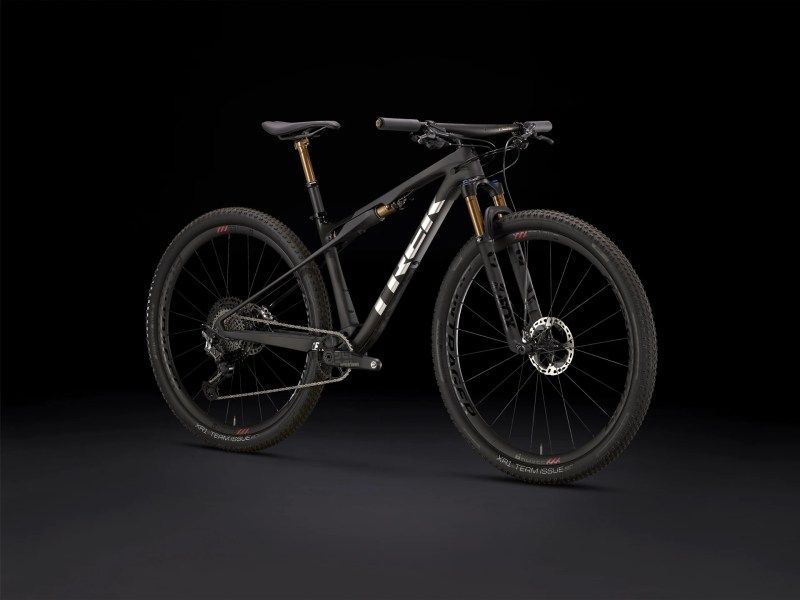
- As I noted above, I do not do this kind of riding. I do not really care about it, so this is my least opinionated category, but I recognize that as a brand you probably must include one of these.
- As a rider, if you must have one, then Just go and buy one of the superlight, under traveled race bikes most companies offer – beware though, they may be lovingly equipped with geometry from 2012. In most cases you will do yourself a favor by buying it a size bigger than you think you need, put a shorter stem on it and a wide bar (the 2012 version of trying to make a bike handle properly by getting back off the front wheel).
- Once you get over how well these bikes climb, only to realize you cannot keep up with riders on modern geometry bikes on the downhills, the first thing you are going to want to do to it is put on a dropper post. Most companies have tried to future proof this area of the bike and deliver the frame ready to accept this basic technology. After you get that installed, go and learn to actually use the dropper post. (As a buyer, stop focusing on how much bikes weigh. It means almost nothing in terms of how it will ride on the trail.)
- Finally, if you are not racing every weekend you are buying the wrong category of bike, XC racing pedigree is not what makes a good versatile every day bike.
So what would I build for an XC race bike? Basically, I would do what Specialized just did and copy the Trek Supercaliber. Something with flexy chainstays and a shock integrated into the design. These bikes really only need about 100mm of rear travel.
- 100mm rear travel.
- 100-110mm fork travel. Rock Shox SID.
- 455 – 460mm reach on a middle size of 5.
- 75mm stem and integrated flat handlebar.
- It’s ok for cables to route through the headset on this bike.
- I would spec this bike with a dropper post. I was asked once what the most important product advancements that have come along on MTB. There is a short list, but dropper post is one of them
- Head angle 66 degrees
- Seat angle 75+ degrees
Bike #2 – Downcountry bike (or short trail bikes).

- This is probably the most interesting category of bikes. Basically, they are short travel bikes with the geometry and reach numbers approaching an enduro bike. Some of them are still on the lighter side of the spectrum and some of them are becoming burly spec in other ways yet staying short travel. I have seen some of these bikes with a more burly fork (like a Fox 36) and more burly tires (maybe with EXO+ casing).
- There is no such thing as a one bike quiver or quiver killer bike, but the downcountry bike comes as close as anything (depending on where you live). If you like flow trails or your tech trails are not Rocky Mountains big, then this is probably your best single bike if you can only have 1 bike. (Although owning just one bike is not an idea that I aspire to).
- 120-130 rear travel – air shock dedicated is ok. I think if you are considering upgrading to a coil shock on a downcountry bike, then you are buying the wrong bike go up to something bigger.
- 140+ front travel – Fox 34 or Rock Shox Pike is fine, but there is also nothing wrong with stepping up to a 36 or Lyrik.
- 29 front and rear wheel size. Hopefully your FS design will allow a small enough bike that you do not have to step to 27.5 or even mixed wheel on this bike.
- Spec’ed with 30mm aluminum rims, 2.4 lighter casing tires (not XC bike light, but something like Maxxis EXO)
- 45mm stem, with a 25-30mm rise bar (do not use a one piece bar and stem, those are ok for an XC race bike but nothing else)
Downcountry geometry – geometry reference is for a bike in the middle. Some brands might call this the medium, others the large.
- 65-66 head tube angle
- 470mm+/- for the reach on a size in the middle
- 77 degree seat tube angle
- Lowest standover possible. 175mm dropper on the middle size, 150mm is fine on the smaller sizes and go, as long as you can fit on the big sizes
Bike #3 – Trail Bike

- The trail bike is the most broad appeal bike in your lineup. But, if you deliver the proper Downcountry bike below this, and the brawler Enduro bike above this – the trail bike becomes pretty focused filling the gap between those 2. This is your Enduro bike if you live in the midwest or south or somewhere where the hills are much smaller and less gnarly than mountains. Sure there are tire differences based on where you live, and maybe front end height based on how much climbing or descending you have on your local trails – but those are both adjustable after the sale.
- 140-150 rear travel, air shock spec but the leverage ratio needs to work with a coil shock as well
- 150-160mm fork. Fox 36 or RockShox Lyrik level fork.
- 35-40mm stem, 25-30mm rise bar (do not use a one piece bar and stem, those are ok for an XC race bike but nothing else)
- Spec’ed with 30mm aluminum rims, mandatory that this bike come with more burly casing tires (I prefer Maxxis EXO+)
- This bike should come as both a 29 wheel version and an MX wheel version. If you cannot justify making both, then do 29 only as mixed is still a niche. (But if you make 29 only, the smallest of the 6 sizes can be MX wheels for fit, but do not do the smallest bike in 27.5 front and rear – those days have passed.)
Trail bike geometry (medium size)
- 64-65 degree head tube angle
- 470-475mm or more reach for a size in the middle, with the other sizes scaled off of that for smaller and larger riders.
- 77 degree minimum seat tube angle
- Lowest standover possible. 175mm dropper on the middle size, 150mm is fine on the smaller sizes and go, as long as you can fit on the big sizes
Other – build a 60nm lightweight smaller battery eMTb version of this bike. Do not compromise on the number of sizes.
Bike #4 – Enduro bike

- If you build the Downcountry bike and the Trail bike as I suggest above, then the Enduro bike is a brawler. It is meant to be raced or ridden hard on big lines. For most people this is both their Enduro bike and it is their park bike.
- 160 – 170 mm travel rear. Spec it both ways with either an air shock or a coil shock.
- 170-180mm fork. Fox 38 or Rock Shox ZEB.
- 35mm stem, 25-30mm rise bar
- Spec’ed with 30mm aluminum rims, 2.5 Enduro (minimum of EXO+ on the front, DD or DH on rear) casing tires
- This bike should come as both an all 29 wheel version and an MX wheel version. (On the smallest of the 5 or 6 sizes if your design cannot fit a 29 on this travel, just offer the MX wheel version)
Enduro Bike geometry
- 63-64 head tube angle
- 475 mm reach (medium size), with the other sizes scaled off of that for smaller and larger riders.
- 78 seat tube angle
- Lowest standover possible. 175mm dropper on the middle size, 150mm is fine on the smaller sizes and go, as long as you can fit on the big sizes
Other – build an 85nm big battery eMTb version of this bike. Do not compromise on the number of sizes.
Bike #5 – DH bike
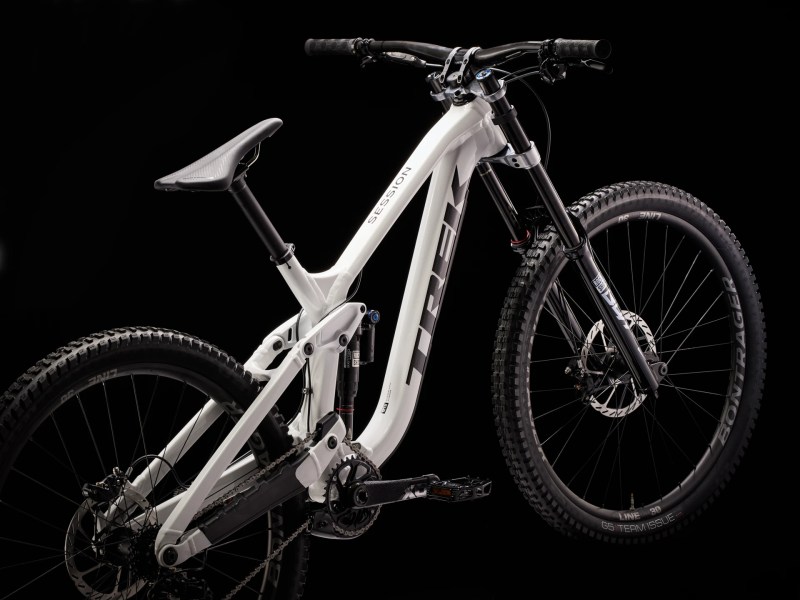
- If you build all of the bikes that I have noted here, you will still need a legitimate DH race bike to compete on that stage. The problem is that the number of DH bikes sold is so small, you may not even need to really sell the bike you are racing to legitimize the brand’s MTB pedigree.
- Start with the Santa Cruz V10 or Trek Session geometry and adjust for the riders on your team. Maybe they want a slacker bike or longer or steeper or… Whatever they need, just build it and if you are going to sell something – sell the same frame. But who cares really?
- In most cases, the brawler Enduro bike is fine for park use. That leaves this bike for people who just have more slots on their wall or have to own all the bikes (Yes, I have one.)
There it is. Pretty simple. Build this lineup if you want to be a player in EVERY category.I know there are other opinions out there. Everyone is entitled to one, but trust me this lineup covers the bases positively. There are not many holes. Well there are holes – hardtails, singlespeeds, fat bikes… yada yada yada. Those are all pretty superfluous. Go ahead and build them, just don’t ask me to spend time thinking about them. I am out riding.
 GoodHeart Solutions
Your article entitled “The Perfect Enthusiast MTB lineup for 2023” deserves a standing ovation. Excellent work!
LikeLike
Excellent blog article about “The Perfect Enthusiast MTB lineup for 2023”. Your expertise shines through, and I learned a lot. Looking forward to more from you.
LikeLike